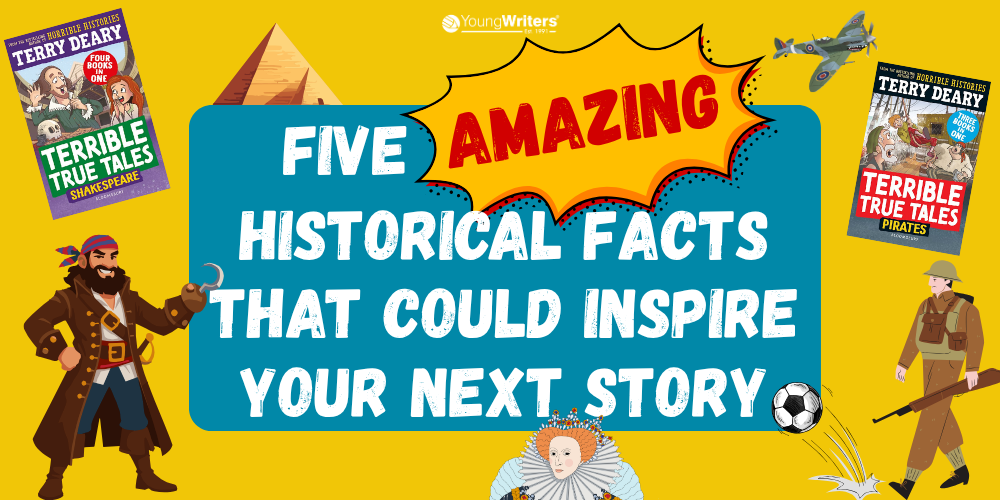
Blog Five Amazing Historical Facts That Could Inspire Your Next Story
By Lydia Turner | Guest Blog
Have you ever
wondered where authors get their ideas? Sometimes it’s from dreams, or from the people you know. But some of the
best story ideas have already happened in real life. History is full of daring
escapes, unlikely heroes, mysterious events and unforgettable characters, and
all it takes is one fascinating fact to spark an incredible piece of fiction.
That’s exactly what author Terry Deary
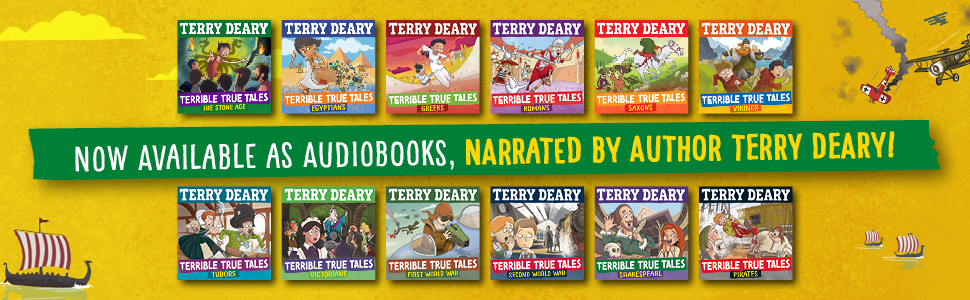
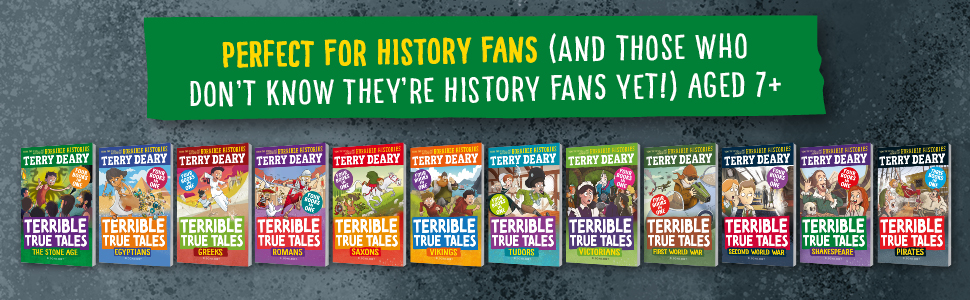
does in his Terrible True Tales series. Each book takes real historical people, places and events and imagines
what it would have been like to experience them through the eyes of a child.
The result is historical fiction that’s exciting, witty and packed with
adventure.
If you’re looking for inspiration for
your next story, here are five surprising moments from history that could
become the start of something brilliant.
1. Soldiers really did stop fighting to play football
The First World War was one of the
deadliest conflicts in history, but on Christmas Day 1914 something
extraordinary happened. In some areas, British and German soldiers climbed out
of their trenches, exchanged gifts, sang carols and even played football
together.
Imagine you were there. Would your main character be a young
messenger carrying letters between the trenches? A local child watching from
afar? Or perhaps one of the soldiers?
A single true event can become
countless different stories depending on whose eyes you tell it through. Terry
Deary uses this remarkable moment as the inspiration for one of the stories in Terrible True Tales: First World War.
2. Ancient Rome had its own ghost stories
Do you think ghost stories are a modern
invention? Think again. The
Roman writer Pliny told the tale of a haunted house where mysterious chains
could be heard rattling in the night. Whether people really believed in ghosts
or whether there was another explanation is still up for debate.
Perhaps your main character is determined to prove the ghost
is real. Or maybe they’re convinced it’s all a trick. It makes the perfect
mystery!
This fascinating piece of history
inspired The Grim Ghost in Terrible True Tales: Romans, showing how a real historical account can
become a gripping adventure.
3. Workers building the pyramids weren’t afraid to complain
When you picture Ancient Egypt, you
probably imagine the towering pyramids and powerful pharaohs, but the people
who built those incredible monuments were real workers with real jobs, and real
disagreements.
Imagine working on one of the greatest buildings ever
created while trying to deal with a demanding boss or unfair treatment. Not
fun!
These everyday struggles inspired The
Plot on the Pyramid in Terrible True Tales: Egyptians, using the world’s most famous landmarks as
the setting for an exciting story.
4. A Pirate Queen met the Queen of England
Pirates weren’t all fictional
characters with parrots and treasure maps. Grace O’Malley, one of history’s most famous pirates, became so powerful
that she met Queen Elizabeth I in person!
Would your character in this story be a servant in the palace? A cabin boy from
Grace’s ship? Or someone secretly listening outside the room?
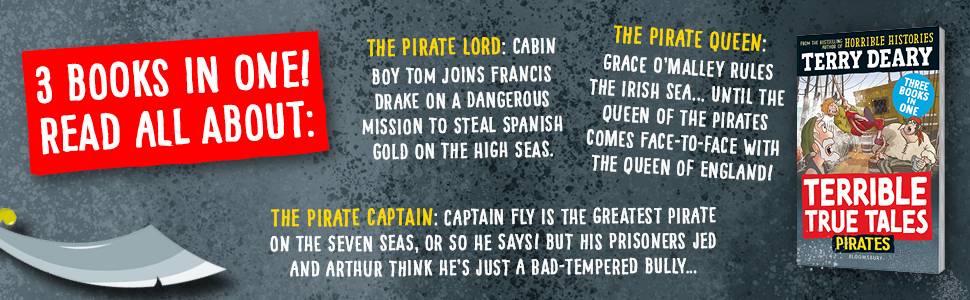
One real meeting between two extraordinary women opens up endless storytelling possibilities. Terry Deary explores this remarkable interaction in Terrible True Tales: Pirates.
5. Shakespeare’s actors had to perform during a plague
Life in Shakespeare’s theatre wasn’t
always glamorous. Plague outbreaks regularly closed theatres, putting
performances and livelihoods at risk.
Imagine you’ve finally landed the biggest role of your life,
only to hear the theatre might close before opening night! How far would your
character go to save the performance?
Terry Deary transforms this historical
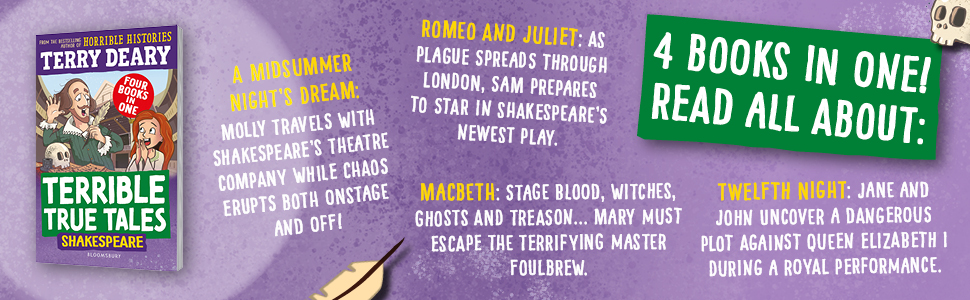
fact into a compelling story in Terrible True Tales: Shakespeare.
Turning facts into fiction
The best historical fiction doesn’t
simply retell events from the past, it asks all sorts of questions.
- What if I had been there?
- Who might have witnessed this event?
- What would an ordinary child have
thought or felt?
- What happened just before, or just
after, the history books stop telling us the story?
Next time you come across a strange
newspaper headline, visit a museum or learn about a fascinating historical
event at school, don’t just remember it, ask yourself whether it could become
your next story.