
Blog How Dungeons & Dragons Became A Writing Strategy
By Adam Morris | Guest Blog
Reluctant writer. Those two words strike fear into teaching staff.
When it’s bad, it’s bad. Creative prompts unpicked to oblivion. Torn paper. Blank stares. The phrase: “I just don’t get it.”
It’s a story many of us know too well.
One such story inspires this article. Out of a need to be
inventive and try something new, I made a wild decision to try and use Dungeons
& Dragons as a teaching tool. And in hindsight, I’d like to reflect back.
Did I get things wrong? Without a doubt.
Did it work? Kind of.
Would I try it again? Knowing what I know now, 100%.
For any educator at the end of their rope, stuck for ideas on how to bring games into their classrooms, this is for you.
From my attempts to plan the lessons, do the research, apply this to teaching creative writing skills, right through to the resources I wish I’d found sooner, the hope is you’ll find this article to be a helpful starting point if you want to try the same strategy.
Photo by Jonathan Kemper on Unsplash
When a pupil realises they can simply do nothing and run the
clock down, it’s devastating for staff.
As a work avoidance strategy, it shouldn’t work. The staff don’t win. But neither does the pupil. However, it’s effective because, as an ultimatum, it costs you too much time.
The school year marches on. You’re expected to march with it. You can’t pause time, and there’s just no resources in most cases to help the pupil catch up. Everything is too stretched.
Enter our main character.
To say this pupil didn’t enjoy writing was an understatement. Offers of a laptop, extra time, or shorter writing exercises didn’t appease the white-hot malice. Prompts aggravated more than they helped. And most lessons ended the same way.
Work avoidance. Head on a desk.
Having tried numerous strategies, our department was asked
to spare a member of staff.
In this instance, our school was lucky. Due to a fortunate mix of priorities, the right subject specialism, and knowing the pupil already, I ticked a lot of boxes. So I was picked for the task.
It was a good fit. But I knew lots of approaches and tactics had already failed. I was at a loss myself.
But does a little thing like that stop you? No. School staff, as you may know, are forged by failure.
I started researching other creative ways of teaching creative writing, and I had a stroke of luck.
● Firstly, I realised this pupil was big into their RPG games. As a gamer, this was good news. We had common ground. Result.
●
Secondly, another teacher had tried a teaching
approach, using a set of dice to decide activities with their class, and it had
gone well.
●
Thirdly, outside of work, I’d witnessed first-hand a
friend discover a love of storytelling due to Dungeons & Dragons.
Timing was everything. And seeing how a standard lesson
would fall apart, I didn’t want to repeat the same types of “fun” activities
which ultimately led nowhere.
So I swapped out the teaching rulebook and picked up another kind.
A Dungeons & Dragons Manual.
Dungeons & Dragons is a tabletop role-playing game. At its core, you play a character and go on an adventure, which is planned by a gamemaster. This is someone who narrates the story as you play through it.
Everything you do is decided by a roll of the dice. Roll well and it’s epic. Roll bad and it’s disastrous.
If you’ve seen Stranger Things, you’ll have a vague idea of how it works.
As a lesson plan, Dungeons & Dragons felt pretty rogue.
But there was a method to my madness.
My goals were clear. Help this pupil put pen to paper, feel confident about it, and - dare I say it - find a love of writing.
This game offered an answer to this, as well as a lot of advantages.
1) A Creative Environment
Writing is at its best when it feels natural. It’s why writers often carry notebooks. You get your best ideas on the bus, or in the queue for a coffee.
I wanted to tap into that cognitive limbo between rest and focus. It’s where your brain partially switches off. You tend to daydream and feel at your most creative.
Dungeons & Dragons creates and nurtures this environment. It immerses you in a story. The goal was to fire up the pupil’s creative side and get their mind wandering.
If they have ideas, they might start writing them down.
2) An Accessible Environment
Imagine creating an activity that can work with or without you. Sometimes, in a lesson, you’re just not in a creative mood. But later that day, you may feel different.
Dungeons & Dragons removes some of those boundaries. Like most games, you can play when you’re ready.
My hope was to set up the tools. Whether lessons went well or not, I wanted my pupil to go away feeling inspired.
Who knows? Between classes, maybe they’d start writing independently.
3) A Playful Environment
The gaming industry has boomed over the last few decades. According to Uswitch, the industry was worth $27.97 billion in 2024.
As well as their role in entertainment, they promote curiosity and active learning too. Look at boardgames like Scrabble and Boggle. Video games like Minecraft and Little Big Planet have honourable mentions too.
With that in mind, it’s no surprise games and gamification have been long established as teaching tools.
After all, play is vital to development.
Dungeons & Dragons works the same way. The reward is the activity itself. Fun for the sake of fun.
Learning is a bonus.
I’d been playing Dungeons & Dragons for a few years. Ironically I used to think the game was a massive waste of time.
But over lockdown, the tabletop behemoth had won my heart.
I thought about what had changed to make the game better for me. More than anything, the pace had been a factor.
Aiming for the same goal, I made some adjustments:
Full disclosure. There’s more than one type of dice. You might already know this. But I didn’t. This is why I’m taking the time to mention it in case you don’t either.
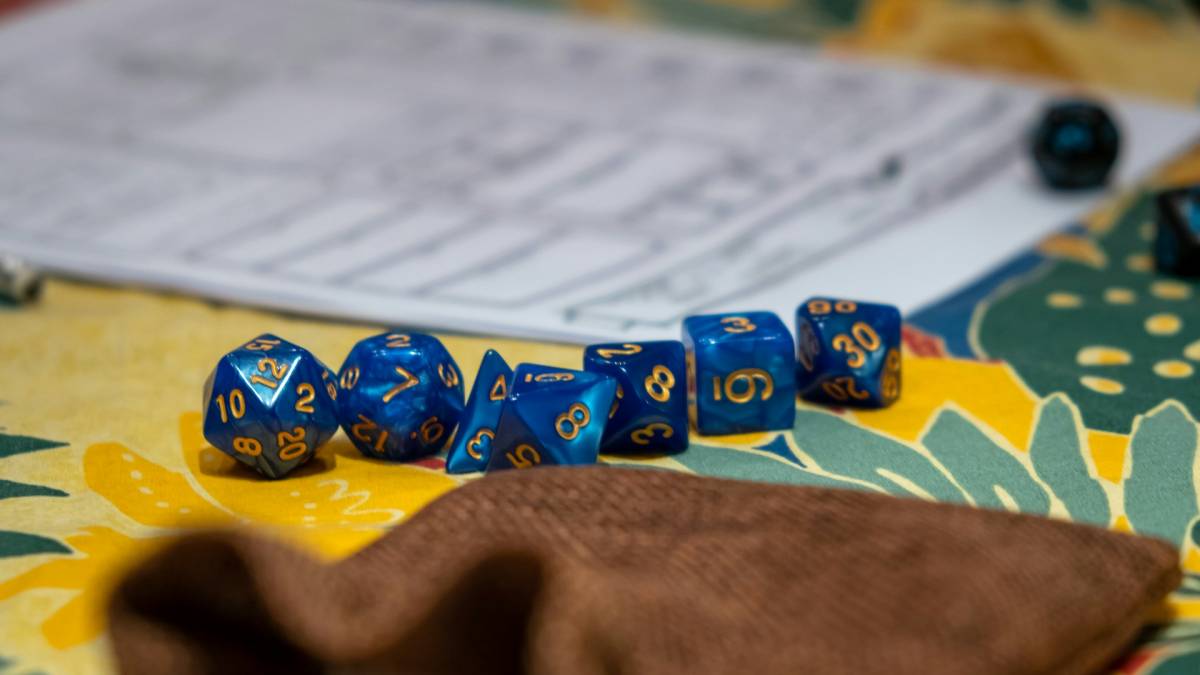
Dungeons and Dragons use seven types of dice. The d20 (numbers 1-20) are default dice, used for most checks and attacks to see what works and what doesn’t work. The others have more specific uses, like for damage.
Worrying that more dice, or even different dice will mean more complications, I made the decision to stick to six-sided dice, or d6.
In some ways, this was helpful. Less rules to remember. But it made some parts of the game feel too easy or too difficult. This was risky.
Thankfully, my pupil didn’t mind. But if I was to do it again, I’d start with a d20, and the d6.
This may be the educator in me talking. But I love visual
cues and resources.
Dungeons & Dragons is a game for the imagination. But out of concern my pupil would struggle to visualise everything, I relied on visuals a lot, browsing the internet for pictures of characters, story settings, and all the items and equipment used in the adventure.
I used PowerPoint to store all the different “chapters” and “subchapters” of a story, and printed out rules and images on Word.
This worked fairly well. But it wasn’t as fluid as I’d have liked. Linking slides made it easier. But it took a lot of planning.
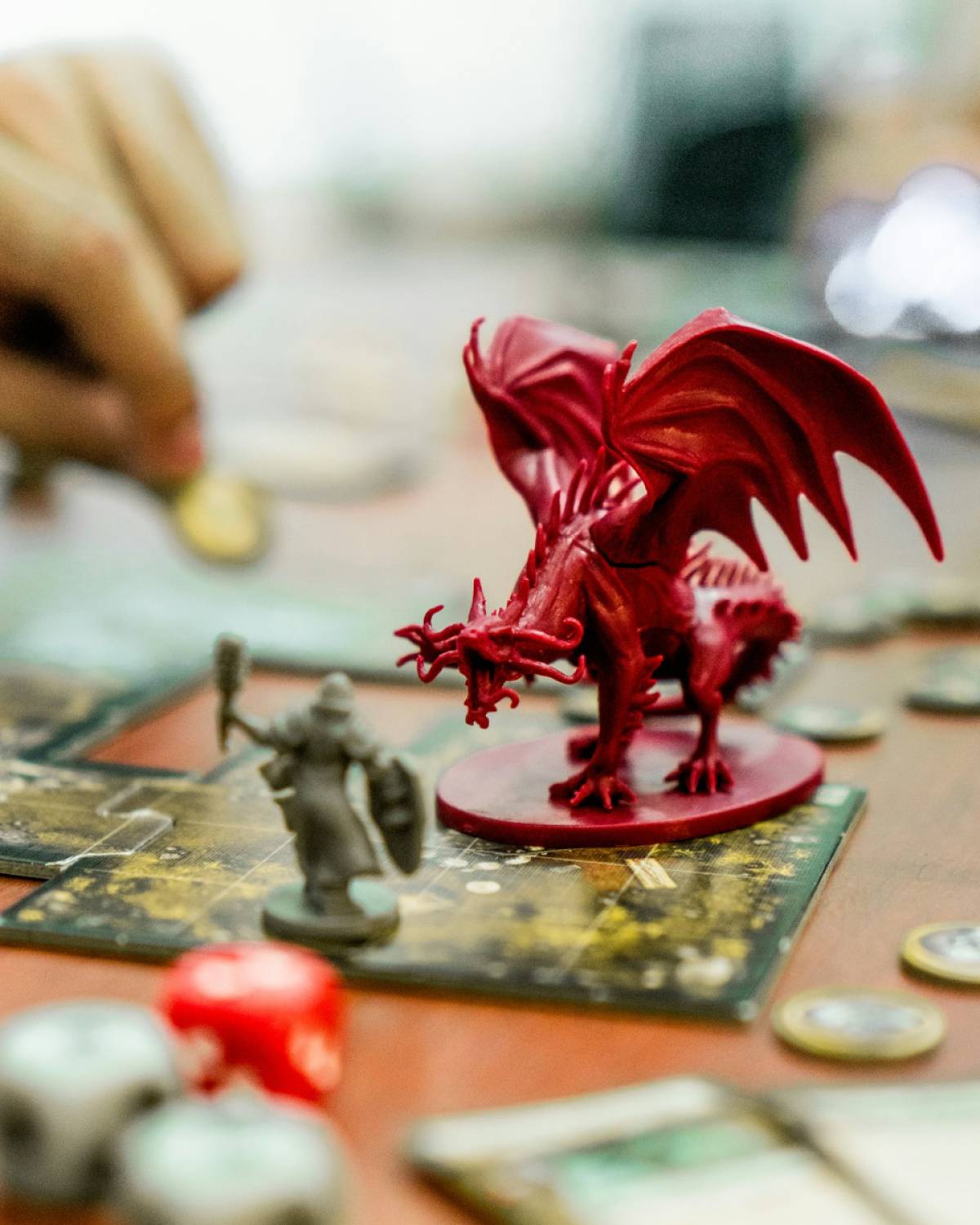 Photo by Clint Bustrillos on Unsplash
Given the chance, I’d have also used maps and player tokens
to make the game feel more tactile.
They can take ages to produce, especially when you don’t have the software to make them.
But they add something extra to the game.
Part of planning a Dungeons & Dragons is having the props and the dice to make the game workable. This is all up to you. But the more you put in, the more you get back.
Otherwise, you just need a pencil and some paper to make notes. Some people like to print off maps with grid paper too. But it’s down to preference.
If none of this has put you off, there’s a further list of resources below that I definitely wish I’d known about sooner:
●
D&D Beyond is your encyclopedia. Rules,
characters, everything. There’s also an option to sign up for pre-made
characters and campaigns.
●
The map maker I wish I’d heard of sooner. It’s
free to use with no login required.
●
Canva is pure magic. Create background images, props, and
use their frames feature to create character tokens.
●
Sam Cheung plays D&D too, and will sometimes use
the game when teaching. In his blog series, he talks about some of his
experiences.
●
Critical Roll is a podcast about voice actors who play
D&D together. It’s not family friendly, but is a masterclass in
storytelling and character creation. It’s also very good if you’re new to
playing.
●
Immovable Rod is a social media channel and
fountain of story ideas. They’re happy for you to “borrow” them too.
Back To The Story
After a couple of introductory lessons, I rocked up one day and said to the pupil that we were going to plan a D&D campaign.
Their reaction? No response.
The idea was the players would find themselves stranded on an uncharted island. The goal was to escape. But as the players progressed, they’d learn there was more to this island than meets the eye.
This is where we came in. Our job was to design the island and then play-test it.
Over time, apathy fell away to curiosity. While coming up with ideas, they’d ask questions about the obstacles players would face. They’d offer suggestions verbally.
Interestingly, they were very keen on the game mechanic that success or failure depended on a dice roll. They enjoyed the chaos, often asking about both the good and bad outcomes.
I kept going.
Not every lesson went well. Sometimes lessons started or ended with their head on a desk. But there were times when they’d snap out of a bad mood, just enough to encourage me.
I kept going.
I can’t remember exactly how long it was, but I recall the lesson vividly. They’d been quieter than usual. I was just starting to wonder how I could take a different approach. Then after making a face like they were wondering what was for dinner, they took a pen and scribbled some notes like it was the most normal thing in the world.
Apparently they didn’t like one of my ideas. This was their suggestion.
“What do you think?” they said.
What do I think?
What do I think?!
I wanted to cheer.
They’d just presented an idea in one of the longest pieces of descriptive writing I’d seen them produce. Ever.
But I played it cool.
“Not bad,” I answered.
Even paused for effect and everything.
Author Bio
Adam Morris has worked in education for over a decade, teaching literacy groups, and writing for organisations like Twinkl and Young Writers. He loves games, reading, and dancing.