🍪 Important information about cookies
We use cookies to help us improve your experience with us. By continuing to use our site, you are accepting such use.
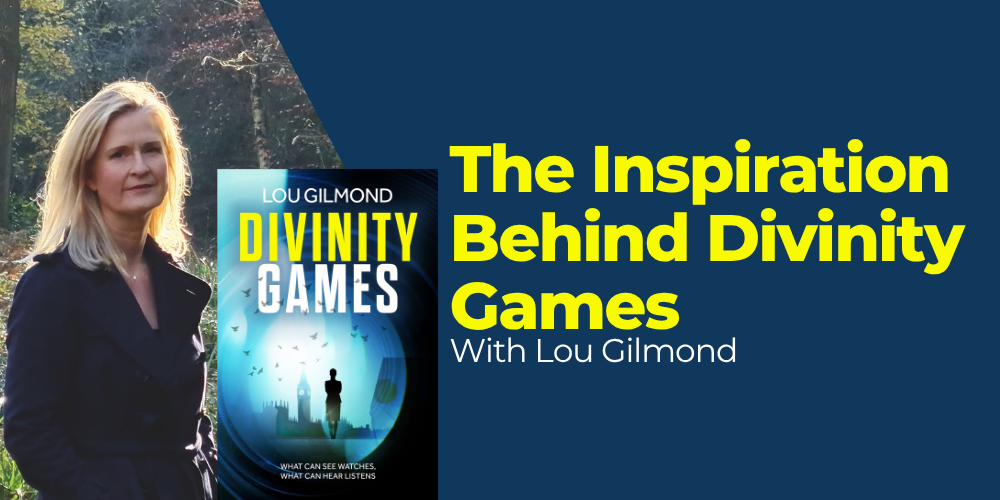
An inside look at the inspiration, characters, and real-world themes behind Lou Gilmond’s gripping political thriller.
What inspired you to write Divinity Games, and how did you come up with the idea?
The idea for Divinity Games had been swilling around in my head for many years before I sat down and actually started to write it.
I already knew my two main characters well enough, because they had made appearances in a couple of my earlier books. Their names are Esme Kanha and Harry Colbey, and they are MPs, or Members of Parliament. But, unlike a lot of their colleagues, they are good-hearted politicians who want to do what’s best for the country, rather than just get rich or be famous.
This time round I wanted them to face the ultimate disaster - the potential fall of democracy. Will they be able to save the nation?
In Divinity Games, the main character goes up against powerful people. Have you ever had to stand up for something you believed in?
I think every day we are faced with multiple small chances to stand up for what we believe in.
That might be doing something to reduce our contribution to global warming or plastic pollution, making a decision to be kind to a person who is struggling, or standing up for someone who is being bullied by letting a teacher or parent know.
All of these small acts add up to much more than their parts. And they can be just as powerful a force against people or companies that are not acting as they should.
If Divinity Games were turned into a film or TV show, who would you cast as Harry Colbey?
Harry Colbey is a kind man, with two older children. He’s a little weary because he’s had been working hard all his life, sticking up for the rights of his constituents who voted for him, and he is thinking of retiring. But when he and Esme Kanha uncover a conspiracy between corrupt senior politicians and the leaders of a technology company, he doesn’t think twice before leaping in to work with her to expose them.
I think Hugh Bonneville, who played Mr Brown in Paddington, would be excellent in the role.
Divinity Games plot centres around AI, what do you find most exciting, and most worrying, about AI?
It’s exciting to think that recent advances in AI will mean many of the cool things from science fiction movies of my past are going to become part of our everyday lives. Robot servers at shopping counters that can speak to us just as a human would. All-knowing digital assistants ready to jump to our command.
But that also means that many of the scary things in old science fiction movies might possibly come true too if we are not careful with this new technology. Robots taking over everyone’s jobs and maybe even the world! But don’t worry, that’s a way off yet and just like the heroes in Divinity Games, there are real politicians in the Houses of Parliament working hard to make sure it doesn’t happen.
You used to work in politics - how is that different from writing books, and has it helped your storytelling?
It’s very different! Politics is all about talking to people and trying to persuade them to see your point of view and listening to theirs. Writing is much more solitary, with many hours sat at a desk creating prose and then editing, editing, editing. But… once the book is written, it is not so dissimilar. Talking to people again, getting feedback for improvements, meeting with lots of different people with the aim of spreading the word about how great the book is, in the hope people will buy it and love it.
What made you want to become a writer, and what was your first story about?
I’ve always adored reading and remember writing crime stories when I was young and loving it. But then I started working and my writing hobby was put aside.
Now I wish I had not left it so long before I took it up again properly. The truth is that once you get going, it’s easy to find odd little times to write, even if you are busy studying or working at other things or looking after family. A couple of hundred words each week doesn’t seem much but it soon mounts up to something substantial.
Do you ever base your characters on real people you’ve met - or even yourself?
When you are writing a character, to make them well rounded you have to put in all aspects of their personality – the good and the bad. So, I never base a character on someone real. I wouldn’t want to upset them, were they to recognise themselves.
Instead, I like to build up characters using a mixture of different bits of behaviour I’ve seen in lots of different people, including myself. Then I like to stop and sense check. Would this character really act like this? Knowing where they grew up, who their parents are, what life has thrown at them - is this believable? If the answer is no, then it has to be changed. You can’t make a character do something they wouldn’t do just to suit the plot. Or the reader will start to disbelieve the whole story. And you don’t want that and neither do they.
What’s the hardest part of writing a thriller, and how do you keep readers hooked?
Readers often call my thrillers page-turners, and I think that’s because I work hard to make sure they are exciting all the way through.
If you’re writing a thriller you need to always have something that the reader wants to find out. And that’s both across the longer narrative of the book or story (eg who committed the murder? Who is behind the explosions? Is so and so really good or are they scheming?) but also from chapter to chapter and even page to page.
I like to make sure there are quite a few questions that the reader wants to know the answers for, so that if something gets resolved, there are still reasons to keep turning the page.
What one piece of advice would you give to budding authors?
My strong advice would be to make friends with other writers. Maybe try and join or even set up a writer’s group. You’ll be able to get their valuable feedback on your writing in return for giving yours to them. And because they’ll be on their own writing journey, you might get a sneak preview of what happens further down the line.
Writing can be hugely rewarding, but it can also be challenging when you have to face rejections. No one understands that better than another writer. They will support you through the set-backs and be excited for you when you succeed. So, from one writer to another – Good luck!
Where can we find out more about Divinity Games, and you?
You can buy Divinity Games in any good bookshop or download it as an ebook or audible book in all the usual places.
Find out more about AI in fiction, my journey and of course my writing at: