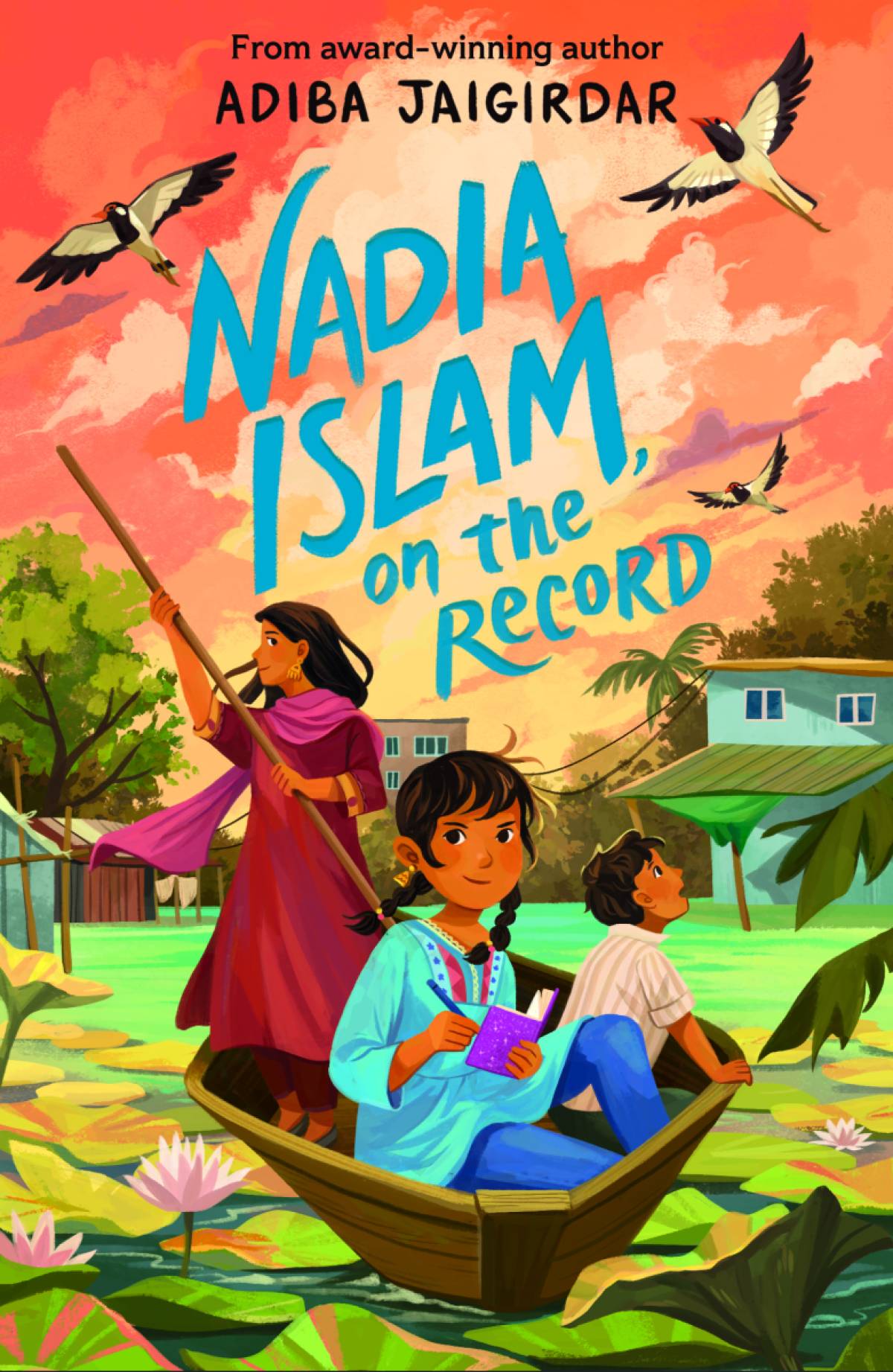
Blog On The Record - Q&A with Adiba Jaigirdar
By Jenni Harrison | Author Q&A
What inspired you to write ‘Nadia Islam, On The
Record’?
I was inspired by my own childhood experiences from when I grew up in Bangladesh and when I went back to visit after moving away. I have a lot of fond memories of spending time with my cousins and my older brother. We didn’t exactly do a Ramadan race like Nadia and her family, but we used to be very competitive about trying to see who kept the most fasts.
I also have lots of memories of flooding that happened while I was there, like having school cancelled because of knee-deep water on the roads. At the time, I didn’t really think too deeply about it but as I grew up, I learnt more about the circumstances that leads to frequent flooding in Bangladesh, and the fact that it’s a very climate-vulnerable country. I was inspired by a combination of all of these things, and wanted to write a book that explored my own fond experiences of growing up and visiting Bangladesh, while also shining a light on some of the difficulties that Bangladesh has been facing.
Why did you choose Bangladesh during Ramadan as the
setting for this book?
Ramadan is a very communal experience. During that month, Muslims across the world are fasting. You’re also really encouraged to engage with community, whether this is your friends or family, your local mosque, or just people in your area. Even here in Ireland, when we have had Muslim neighbours who we barely knew, they would sometimes make us food during Ramadan, and vice versa. It’s one of my favourite things about the month, how it really helps you see the importance and value of community.
Nadia Islam, On The Record is very much about community, because I think community is important to affect change, and it’s also important to care for your community and advocate for them. So, it just made sense to set the book during Ramadan, and because I wanted to explore themes of climate change, community, and journalism, the setting of Bangladesh also seemed very fitting.
What do you hope readers will take away from Nadia’s
journey?
I hope readers can learn that our voices have power and that even a single person can speak up and affect change, especially if they have a community behind them. I also hope that readers can recognise that climate change is not just something that will have disastrous effects in the future, it’s destroying people’s lives now. There are many people around the world currently being affected in major ways by climate change, and their stories are not always told in Western media.
If you could meet any character from the book in real
life, who would it be and why?
I would love to meet Nadia’s khalamoni. As a journalist, I think she’s probably seen and heard so many things, and I think it would be interesting to hear some of her stories.
Nadia is passionate about journalism – did you have
any aspirations to be a journalist when you were her age?
Like a lot of people when they’re younger, I had many aspirations when I was around Nadia’s age, and being a journalist was definitely one of them (other aspirations included being a singer and a teacher). I loved to write when I was younger and though I mostly wrote fiction, I knew that journalism included a lot of writing, so it definitely appealed to me.
What tips would you give someone who wants to write
their own news report?
What’s the most important thing to focus on when
writing a news story?
I think it’s important to do your research and not take anything at face value. The role of a journalist is to ask questions and interrogate everything, and that means doing your research and being informed.
Do you have a routine or any habits to keep you
writing and inspired?
If I’m struggling to write or get motivated, I set a short timer (maybe 10 or 15 minutes, or even 5 if I’m really struggling with motivation), and I just do what I can during the length of that timer. Usually, it just helps me get out of my head and let the writing flow. And no matter how much I’ve set the timer for, I find that I continue writing for much longer than that. Sometimes, the difficulty with writing is just that push to get started.
Do you have a favourite place to write?
My writing usually thrives when I’m not always writing at the same place. So, I kind of like writing wherever I can, and trying to switch it up. So, basically my favourite place to write is wherever I’m getting the most writing done on any given day.
Can you share any sneak peeks or hints about what
you’re working on next?
I’m working on some fun projects but unfortunately nothing I can really share anything about. But keep an eye out!